Picture a 70-year-old sitting on the edge of a bed in a typical 3-room flat. They push themselves up to stand, but the mattress perimeter gives way—it sinks a few inches under their weight. That sudden dip throws their balance. In a cramped 11 sqm bedroom, there's often a sharp-edged nightstand or a solid wardrobe right beside the bed. A stumble becomes a hard fall against furniture. That’s not just discomfort; it’s a safety hazard waiting to happen.
Edge support isn’t a luxury feature for orthopaedic mattresses. It’s a structural necessity, especially for seniors with slower reflexes or weaker joints. A mattress engineered for spinal alignment should maintain its integrity everywhere, not just in the centre. When the sides compress too easily, the entire purpose of the firm support is compromised at the moment you need it most—getting in and out of bed.
Many mattresses, even firm ones, suffer from perimeter collapse over time. The foam layers at the edges can lose density, or the spring system might not be reinforced along the sides. You’ll know it when you sit on the edge and feel a distinct sag, a dip that pulls you down. For an elderly user, that dip translates to instability. They might need to grab the nightstand to steady themselves, which isn’t ideal if that surface is cluttered or slippery.
So what should you look for? A perimeter built with high-density foam encasement or a reinforced border of firmer pocketed springs. These constructions resist that sinking feeling. They create a stable platform around the entire mattress, turning the edge into a reliable seat or step. In a small HDB bedroom where every centimetre counts, that firm edge effectively becomes part of your safe floor space.
There’s one exception: if the bed is placed against a wall on both sides, edge support matters less for sitting. But in most layouts, especially with a nightstand on one side, a collapsing perimeter is a risk you simply cannot ignore. It’s a detail often overlooked in showrooms, where you test the centre lie-down feel. Always test the edge sit-down feel too. That’s the real test for safety.
That perimeter dip you notice after a few years isn't just a minor annoyance—it's a sign the mattress core has given up. High-density foam beds, especially the firm ones marketed for orthopaedic support, often develop a permanent sag along the edges because the foam compresses over time. It's not about the foam being soft; it's about fatigue. The material simply loses its ability to rebound fully, particularly under the constant pressure of sitting on the edge to get up. In our climate, that humidity seeps into everything and accelerates the process, making the foam feel softer and less resilient year after year.
Pocketed spring constructions handle edge stress differently. Each coil is individually encased, so they can push back independently. But the spacing matters. If the coils are too widely spaced around the perimeter, you're essentially sitting on a gap with minimal resistance. A well-designed pocketed spring system will pack those edge coils tightly, sometimes even doubling them up, to create a solid border that feels like a firm bench. That's the kind of support that helps someone with back pain or limited mobility sit safely on the edge without feeling like they'll slide off.
The hybrid option—a firm pocketed spring core wrapped with a foam encasement—aims to marry both worlds. It can work, but you've got to check the foam's density. A low-density foam border will still soften and sag, defeating the purpose of the sturdy coils inside. The construction needs to be cohesive, not just a marketing term.
For lasting edge integrity over five years in a typical HDB bedroom, a tightly packed, firm pocketed spring core is the more reliable bet. The one exception? If you never use the edge for sitting—maybe you've got a bed against a wall or you always get up from the centre—then the foam's gradual softening might not affect you. But for most, especially those needing that stable perimeter for support, the coil system's structural resistance wins.
A mattress that's too firm doesn't just feel hard—it creates a real problem when you need to get up. You push down with your hands or elbows, but the surface won't compress enough to give you leverage. That's especially tricky for anyone with weaker upper body strength or recovering from an injury. You end up struggling to shift your weight, which can strain shoulders or wrists. It's a safety issue that often gets overlooked when focusing purely on spinal alignment. The ideal support shouldn't trap you in place.
Proper orthopaedic support means the mattress holds your spine in a neutral position throughout the night. A surface that's too soft lets the hips sink too deep, creating a painful curve in the lumbar region. That's the exact opposite of what you're buying this type of mattress for. The structured support from high-density foam or firm springs is designed to prevent that sag. But achieving that alignment is about consistent firmness across the entire sleeping surface, not just a rock-hard top layer. It's a precise engineering goal, not just a feeling.
Getting out of bed safely requires a specific kind of surface response. You need a bit of temporary softness under your palms to push against, then a quick rebound to help you rise. A mattress that's purely extra-firm lacks that momentary give, making the action more of a difficult climb than a smooth transition. Hybrid constructions with a firmer spring core and a moderate comfort layer often handle this better. They provide the underlying support but allow that crucial surface compression for leverage. It's a physical dynamic many buyers don't consider until they're already on the mattress.
While the spine needs firmness, shoulders and hips need some accommodation to avoid pain. An entirely unyielding surface can create new aches in those joints, counteracting the back relief you sought. This is where the mattress's top layers—even in an orthopaedic design—play a critical role. A thin, responsive comfort foam over a firm core can disperse pressure without compromising support. Finding that balance is key; you shouldn't sacrifice joint comfort for spinal health. The two needs aren't mutually exclusive in a well-designed mattress.
You can't assess this trade-off just by lying down. In the showroom, you must simulate the act of sitting up and pushing off the edge. Place your hands where you normally would and apply pressure—see if the mattress gives you that helpful rebound. A good one will feel supportive when lying flat but cooperative when you need to move. Don't just rely on a salesperson's description of "firm"; your own body's mechanics are the final test. This simple action reveals more about daily usability than any static comfort check.
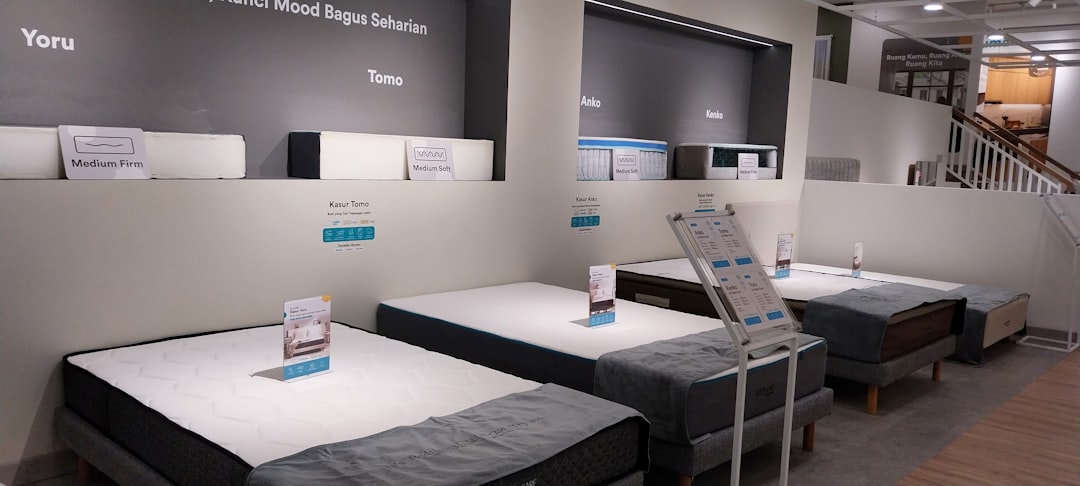
Weekday afternoons at the Joo Seng showroom are quiet. That’s when you can take your time, without the weekend crowd watching. You’ll want to test the edge support properly, and that requires a method. Don’t just lie down in the centre—sit squarely on the perimeter. Plant yourself right at the edge of the mattress and note how much you sink. For an orthopaedic mattress, the reinforced border shouldn’t compress much at all. If you feel a significant dip, that model won’t hold up over years of sitting on the edge to get up.
Go through each model they have on display. Start with a Queen size, since that’s the most common for a master bedroom. Sit, lean, even apply a bit of sideways pressure. A good reinforced edge should feel like a supportive platform, not a collapsing cliff. It’s a non-obvious point, but the compression you feel in the first few seconds tells you about the long-term durability of the support system. A mattress that sags at the edge quickly will likely lose its central support over time too.
This test matters because the perimeter is where you’ll put the most pressure every day. Getting out of bed, especially for someone with back pain or limited mobility, involves pushing down on the edge. A firm, stable border provides that leverage. The Somnuz® range includes several firm-to-extra-firm constructions, and you’ll feel the difference between them when you perform this simple check. One might feel rock-solid, another might have a slight initial softness that then firms up—you need to know which is which.
The only exception to this rigorous testing? If you’re buying solely for a guest room that’s rarely used. Then edge support might be a secondary concern. But for a primary bed, especially for an elderly user or someone with chronic pain, it’s a critical feature. So take that weekday afternoon, avoid the rush, and give the perimeter a proper examination. You’ll leave knowing exactly which model offers the structured support you’re looking for.
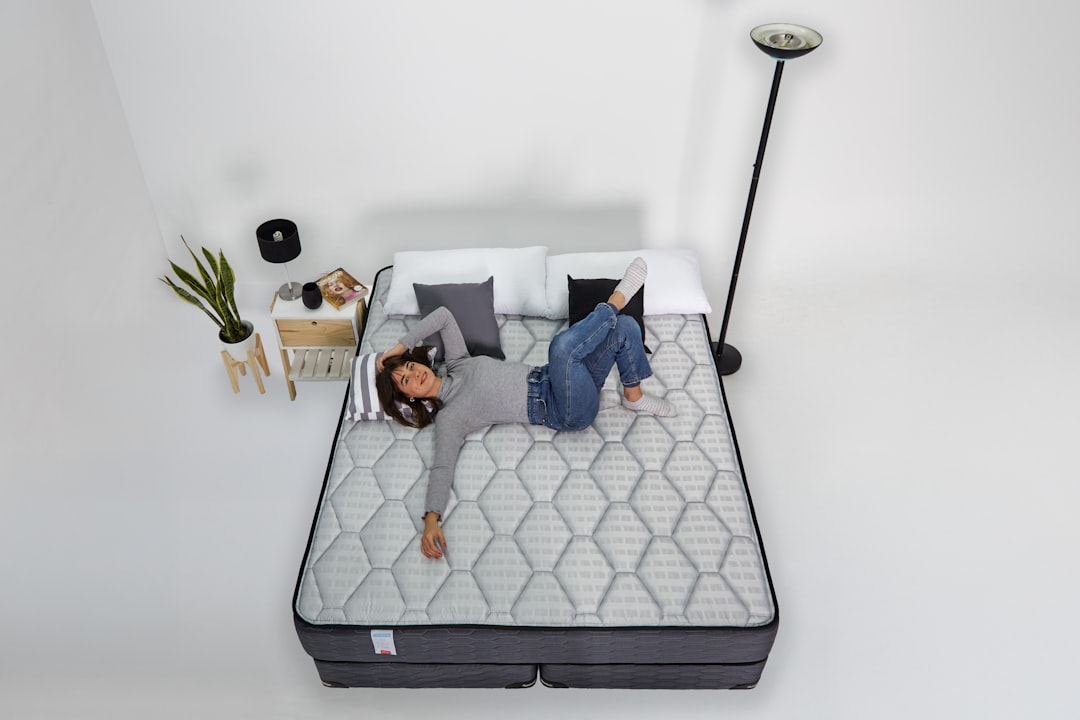
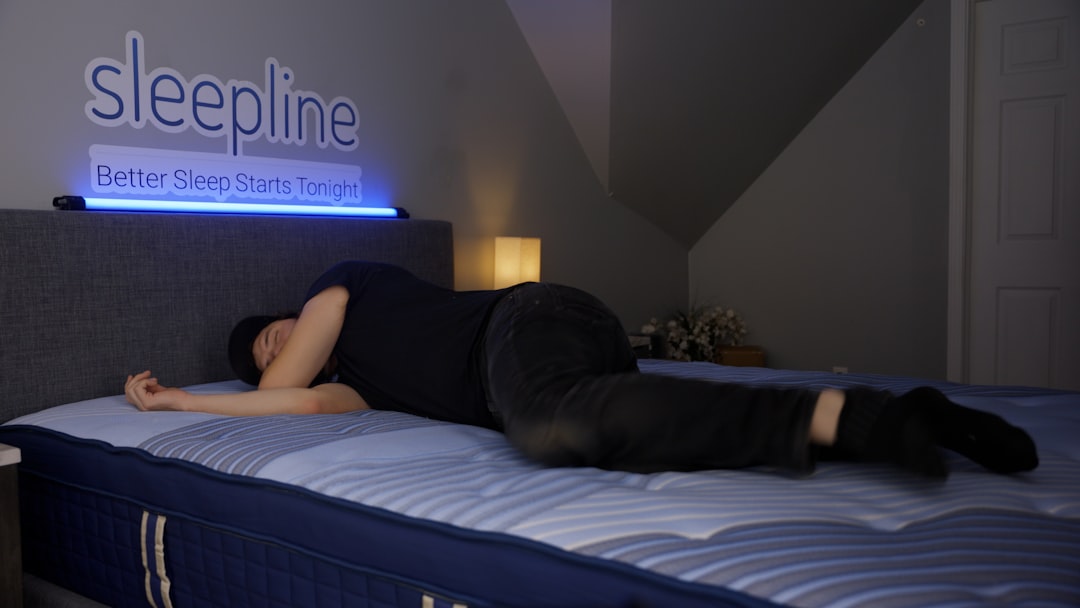
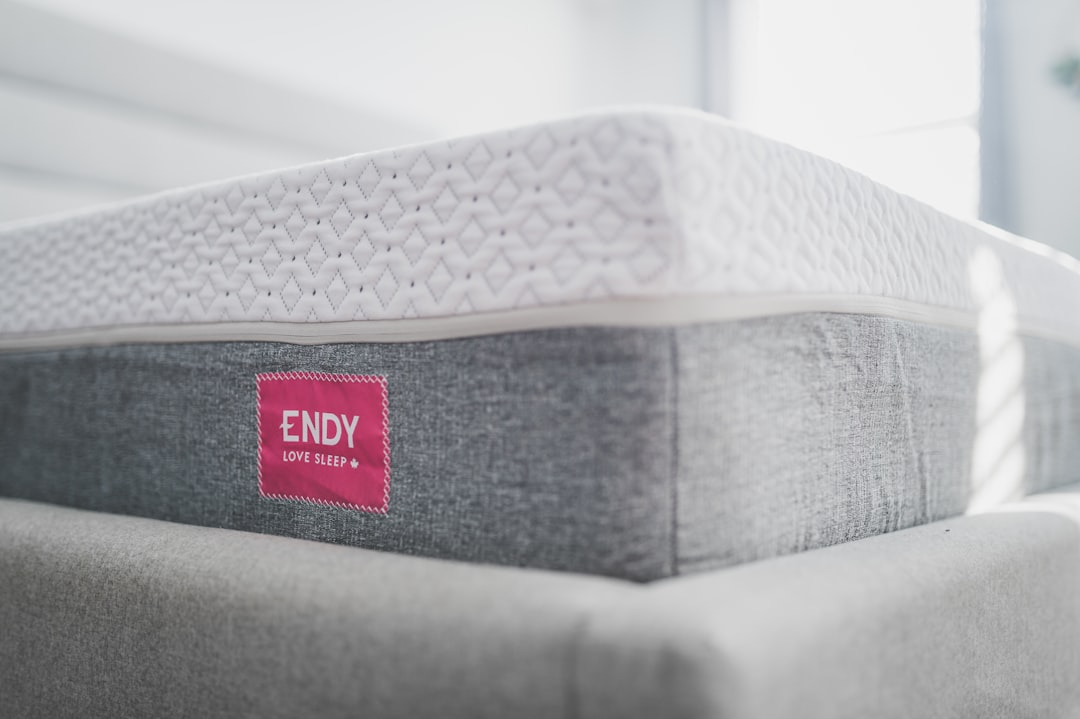
A 152 by 190cm Queen bed in a typical 4-room BTO master bedroom leaves you with one accessible side. That long edge becomes your primary sitting bench for dressing, putting on shoes, or just resting. It’s not a decorative feature you admire from afar—it’s a piece of furniture you use daily, under full body weight.
Consider the layout: bed against the wall, maybe a wardrobe on the opposite side. The free edge is your only point of contact. You’ll sit there every morning. You’ll perch there to fold laundry. Over time, a mattress with poor perimeter support will sag along that side, creating a noticeable dip. That dip compromises the structured spinal alignment an orthopaedic mattress is meant to provide. It’s a practical failure that undermines the medical recommendation.
The construction matters. A high-density foam or firm pocketed spring base needs to extend its support all the way to the edge. Hybrid designs often manage this better. You don’t want a mattress that feels solid in the centre but collapses when you sit on the perimeter. For someone with chronic back pain or recovering from injury, that instability at the edge can be the point where posture fails and discomfort begins.
There’s honestly no exception here. Even if you think you won’t use the edge, the compact room forces you into it. The only scenario where you might compromise is if you’re using a very low platform frame and literally never sit on the bed itself. But that’s rare in our space-starved flats. So when evaluating an orthopaedic mattress, test its edge support as rigorously as its centre. Sit on the corner in the showroom. Apply pressure. Feel whether it holds you steady or lets you sink. That long edge is your functional furniture, and it needs to be built for the job.
You'd think a firm mattress automatically gives you a solid perimeter, but that's a common misconception. Firmness relates to the core support layer, while edge support is a separate construction feature—it's about the reinforcement around the perimeter. A mattress can be incredibly firm in the centre yet still sag dramatically when you sit on the edge to put on your socks. That's because edge support often relies on a high-density foam encasement or a specially reinforced border of springs, which isn't guaranteed in every firm model.
Another persistent belief is that a sturdy bed frame can compensate for a weak mattress edge. It can't. The frame supports the mattress base, but it doesn't interact with the mattress's perimeter integrity. If the mattress itself collapses at the sides, you'll still feel that unstable drop-off, regardless of how solid your platform or slats are. This is especially noticeable in smaller HDB rooms where you might need to use the edge of the bed frequently, simply because there's limited walking space around it.
There's also a specific local assumption that a thin, very hard mattress is the best choice for elderly backs. This often stems from a desire for a traditional, minimalist feel. However, an orthopaedic mattress designed for spinal support isn't just about being hard; it's about structured, layered support. A thin, uniformly hard slab offers no pressure relief for joints and can actually exacerbate discomfort. Proper edge support in these designs ensures safe, stable movement for getting in and out of bed, which is a critical consideration for older users. The only scenario where you might genuinely consider a thinner profile is if ceiling height in a loft bed is severely limited, but even then, the construction of the edge matters more than the overall thickness.
You’ll notice the same few queries popping up whenever someone’s shopping for a mattress for an older family member. The concerns are practical and urgent, focused on safety and ease of movement, not just comfort.
Orthopaedic mattress edge support for elderly Singapore Edge support isn't a luxury; it's a necessity. A firm, reinforced perimeter prevents that sinking feeling when sitting on the edge to get up. For an elderly person, that stability translates directly to confidence—they can push off without the mattress collapsing under them. Look for models with high-density foam encasing or a reinforced spring border around the sides.
Best mattress for osteoporosis and easy to get out of bed You need a mattress that’s firm enough to support fragile bones but not so hard it causes pressure points. A medium-firm hybrid often works well—the spring layer gives a bit of gentle lift, while the foam provides uniform support. The real trick is the height: a mattress that sits too low on its base makes getting up a struggle. Pair it with a bed frame that raises the overall sleeping surface to a manageable level.
How to test mattress edge support in a showroom Don't just lie in the centre. Sit on the very edge, like you’re about to stand up, and put your full weight there. If you feel a significant dip or roll towards the floor, that edge won’t hold up over time. Walk around the perimeter and press down firmly with your hands—a good edge should resist and bounce back quickly. That’s the one.
Does a bed board improve edge support for back pain? It can, but only if the mattress itself is already too soft. A solid board placed underneath a sagging mattress will stop it from bending in the middle, which might help with overall support. But it won’t magically fix a weak edge. If edge collapse is the main issue, you’re better off replacing the mattress with one that’s properly built for it from the start.
The order sheet is signed, the delivery date booked. That’s when most buyers think the job’s done. But the real work starts now, because the mattress you chose for its structured support won’t help anyone if it can’t get into the bedroom. First thing: open that order confirmation and check the edge construction details. For an orthopaedic mattress, the edge support system—whether it’s a high-density foam perimeter or a reinforced spring border—is what keeps the firm surface stable when you sit near the side. You want that detail spelled out on the paperwork, not just a generic model name. If it’s not listed, ask. That specification matters more for elderly users who might need to use the edge to sit up or lie down.
Next, take a tape measure to your front door and every turn to the bedroom. For a Queen, you’re dealing with a 152 by 190cm rectangle. The lift door in many older HDB blocks is only about 90cm wide. A flexible orthopaedic foam mattress can usually bend to fit, but a hybrid with a firm spring core might be less forgiving. Don’t just measure the doorway clearance; account for the skirting that eats another centimetre or two. Corridor turns in some resale flats can be tight, especially if there’s a built-in cabinet near the entrance. If a King is your choice, the staircase might be the only path—and that usually means a surcharge.
Finally, plan for the old mattress’s exit. In a landed property, you can often schedule the removal with the delivery team; they’ll take it away right from the driveway. For HDB flats, the protocol is different. You can’t just leave a bulky mattress in the lift lobby—it blocks the common area and creates a hassle for neighbours. Many disposal services require you to book them separately, and they’ll collect from your unit door. Coordinate the timing so the old one goes out just before the new one comes in, otherwise you’re stuck manoeuvring two mattresses in a limited space. It’s a logistical step, but skipping it means you’ll be dealing with the old problem while trying to enjoy the new solution.